
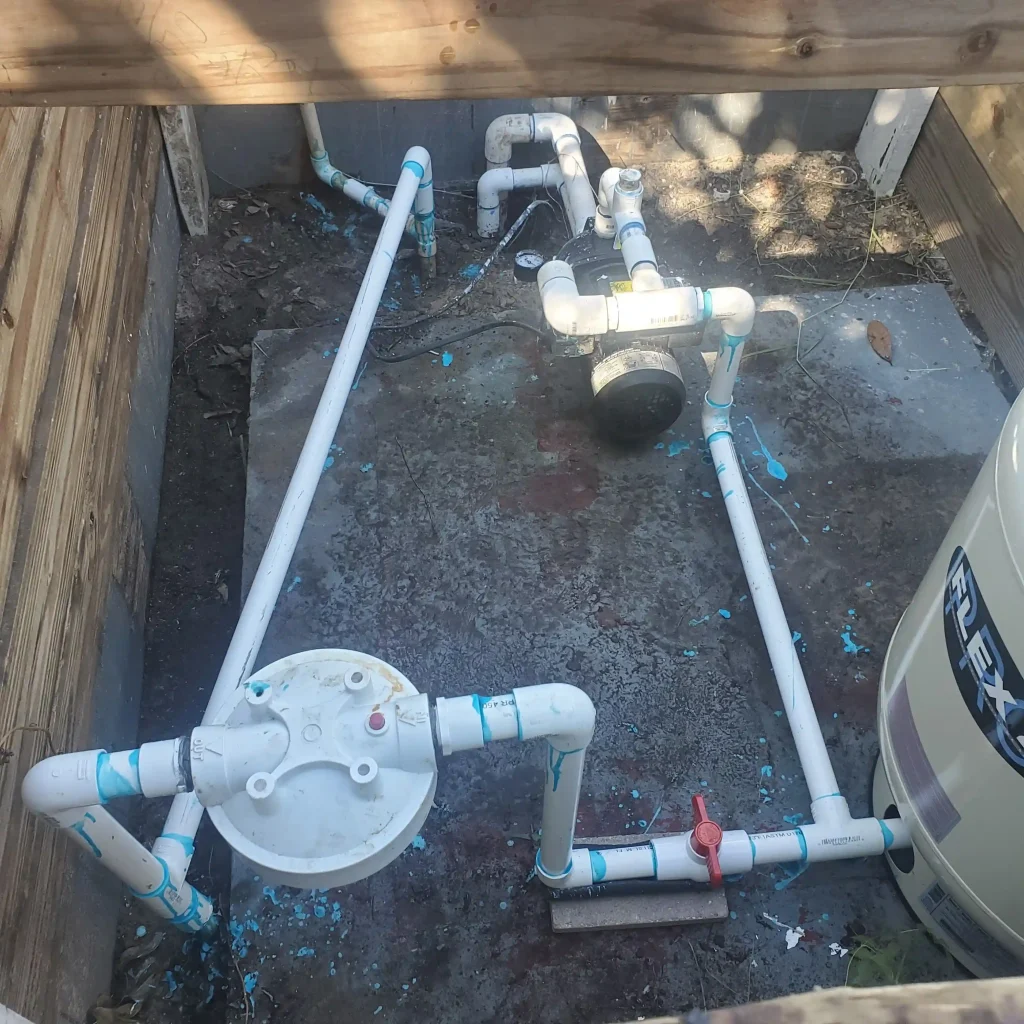
Understanding Core Price Factors
Well pump replacement costs in 2026 typically range from $1,200 to $4,500 for residential installations, though deeper wells or specialized systems can push the total as high as $7,000. The final expense depends on several interconnected variables that homeowners must understand before making a decision.
Pump type represents the most significant cost driver. Submersible pumps, which operate underwater and serve wells deeper than 25 feet, generally cost between $800 and $2,500 for the unit alone. These pumps dominate installations in the Brooksville area, where many wells reach depths of 100 to 200 feet to access reliable aquifer levels. Shallow jet pumps, appropriate for wells under 25 feet, cost less—typically $300 to $800—while deep jet pumps for moderate depths fall in the $500 to $1,200 range. Centrifugal pumps, though less common in residential applications, may run $600 to $1,800 depending on capacity requirements.
Well depth directly influences both equipment selection and labor intensity. A shallow well under 50 feet may require only three to four hours of installation time, while a deep well exceeding 150 feet can demand six to eight hours or more. Installation labor in Florida typically ranges from $65 to $125 per hour, meaning depth alone can add $400 to $1,000 to the project cost.
Horsepower requirements scale with household water demand and well characteristics. A half-horsepower pump suitable for a small household costs substantially less than a 1.5-horsepower model needed for larger homes or properties with irrigation systems. The price difference between these capacities can reach $600 to $900 for the pump itself.
Location and site accessibility also shape costs. Properties with easy equipment access and stable ground conditions keep installation straightforward. Conversely, wells situated in tight spaces, behind buildings, or in areas with challenging soil composition—common in parts of Hernando County where limestone formations predominate—require additional labor and sometimes specialized equipment. Regional pricing variations reflect local market conditions, permitting costs, and the availability of qualified technicians.
Breaking Down Installation Expenses
Labor typically accounts for 35 to 50 percent of total well pump replacement costs, making it essential to understand this component separately from equipment expenses. In the Brooksville and surrounding service areas, installation labor generally ranges from $800 to $2,200 depending on project complexity, well depth, and site conditions.
Most licensed contractors in Florida structure pricing either as hourly rates or flat project fees. Hourly rates for licensed well pump technicians typically fall between $65 and $125, reflecting the specialized knowledge required for proper installation, electrical connections, and regulatory compliance. Project-based pricing offers greater cost predictability, with contractors providing fixed quotes after assessing specific site conditions.
Installation duration varies considerably based on several factors. A straightforward shallow well pump replacement on accessible property with no complications may require only three to four hours. This scenario might total $250 to $500 in labor. However, deep well installations present greater challenges. Extracting an old submersible pump from 150 feet below ground, installing the new unit with proper torque specifications, connecting electrical lines to code, and pressure-testing the entire system can easily consume six to eight hours or more. Such projects push labor costs to $1,200 to $2,000.
Ground conditions significantly impact installation timelines in the Brooksville area. The region’s geology includes layers of limestone and occasional karst features that complicate excavation when access pits or pressure tank placement require digging. Rocky soil extends installation time by 20 to 40 percent compared to sandy or loamy conditions. Wells located in tight spaces—such as between buildings or near property lines—require careful maneuvering of equipment and may necessitate hand-digging rather than mechanical excavation, further increasing labor hours.
Existing infrastructure condition also affects labor requirements. Wells with deteriorated casings, outdated electrical systems, or non-standard configurations demand additional troubleshooting and remediation. These factors can add two to four hours to the project timeline.
Hiring licensed, experienced technicians provides substantial value beyond the installation itself. Properly licensed professionals ensure code compliance, which protects homeowners from permitting issues and potential liability. Their expertise prevents common installation errors—such as incorrect wire sizing, inadequate pressure switch settings, or improper check valve placement—that lead to premature pump failure and costly callbacks. Quality installation extends equipment lifespan by years, making the investment in skilled labor a critical component of long-term system reliability.
Selecting the Right Pump for Long-Term Value
Choosing the appropriate pump type involves balancing upfront costs against long-term operating expenses and reliability. Each pump category serves specific applications and well configurations, with cost implications extending far beyond the initial purchase price.
Submersible pumps remain the most common choice for wells exceeding 25 feet in depth. These units operate underwater, pushing water upward through the delivery pipe. Their submerged operation keeps them cooler and quieter while providing consistent pressure. Quality submersible pumps cost between $800 and $2,500 depending on horsepower, flow rate, and brand. While initially more expensive than some alternatives, submersibles typically offer superior efficiency and longevity in deep well applications common throughout Hernando and Pasco counties.
Jet pumps serve shallower wells and come in two configurations. Shallow jet pumps work for wells under 25 feet, using suction to draw water upward. These units cost $300 to $800 and install above ground, making them accessible for maintenance. Deep jet pumps, suitable for wells up to 110 feet, split pumping work between surface and downhole components. They typically range from $500 to $1,200 but generally prove less efficient than submersibles for deep applications, resulting in higher electricity costs over time.
Energy efficiency ratings directly affect operating costs throughout the pump’s lifespan. A pump consuming 1,200 watts versus an 800-watt model performing similar work costs approximately $150 to $200 more annually in electricity, assuming typical Florida residential usage patterns. Over a 15-year lifespan, this difference totals $2,250 to $3,000—far exceeding any initial price savings from selecting a less efficient unit.
Proper pump sizing requires assessing several factors. Well depth establishes the minimum pressure requirements the pump must overcome. Required flow rate depends on household size, fixture count, and whether irrigation systems draw from the well. A family of four typically needs 8 to 12 gallons per minute, while larger households or properties with lawn irrigation may require 15 to 20 gallons per minute. Undersized pumps run continuously, wearing out prematurely. Oversized units cycle frequently, also reducing lifespan.
Florida-specific considerations include water table depth variations and mineral content. In the Brooksville area, seasonal water table fluctuations can reach 10 to 15 feet between dry and rainy seasons. Pumps must maintain adequate submersion during low water periods while handling peak demand during drier months when irrigation needs intensify. Additionally, the region’s water chemistry—including mineral content and occasional sulfur presence—influences material selection for pump components to prevent corrosion and extend service life.
Anticipating Additional Project Expenses
Well pump replacement projects frequently include expenses beyond the pump and basic installation labor. Understanding these additional costs prevents budget surprises and enables realistic financial planning.
Permitting requirements vary by jurisdiction but generally add $75 to $300 to project costs in the Brooksville service area. Hernando County and surrounding municipalities require permits for well pump replacement to ensure installations meet electrical and construction codes. The permitting process includes plan review and inspection scheduling, with associated fees covering administrative costs. Some contractors include permitting in their quoted price, while others list it separately.
Water testing represents a prudent investment when replacing a well pump, particularly if the existing system is decades old or has experienced recent changes in water quality. Basic bacterial testing costs $50 to $100, while comprehensive mineral and contaminant analysis ranges from $150 to $400. Testing identifies issues—such as elevated iron, sulfur, or bacteria levels—that may require filtration or treatment systems, which add $500 to $3,000 depending on the solution required.
Pressure tank replacement frequently accompanies pump replacement. Tanks typically last 10 to 15 years, and if the existing tank nears this age, replacing both components simultaneously makes economic sense. Pressure tanks cost $200 to $600 for residential sizes, with installation labor adding another $150 to $350. Coordinating replacement prevents a second service call within a few years and ensures the entire system operates at peak efficiency.
Electrical upgrades may prove necessary, especially when replacing older pumps with modern, more powerful units. Existing wire gauge, circuit breaker capacity, and disconnect switch condition all require evaluation. Upgrading electrical service to meet current code and handle new pump requirements typically costs $250 to $800, depending on the extent of work needed. Properties with older electrical panels or undersized circuits face the higher end of this range.
Site access improvements occasionally become necessary. Wells located in areas with poor access may require clearing vegetation, widening pathways for equipment, or stabilizing ground to support vehicles and machinery. These modifications cost $100 to $600 depending on scope. Additionally, in areas where limestone bedrock sits close to the surface—a common condition in parts of Hernando County—excavation for tank placement or access pits may require rock breaking, adding $200 to $500.
Obtaining detailed, itemized estimates from service providers proves essential. Quality contractors provide written quotes breaking down equipment costs, labor, permits, and anticipated additional expenses. This transparency enables accurate budget planning and prevents misunderstandings. Maintaining a contingency fund of 15 to 20 percent above the quoted price provides cushion for unforeseen complications that occasionally arise during installation.
Making the Replacement Decision
Determining whether to repair an existing well pump or proceed with full replacement requires careful financial analysis and consideration of long-term reliability. Several factors guide this decision and help homeowners make the most economical choice.
Well pump lifespan typically ranges from 15 to 25 years depending on quality, usage patterns, and maintenance history. Submersible pumps in the Brooksville area often reach 18 to 22 years when properly sized and maintained, while jet pumps may last 12 to 18 years. Pumps approaching or exceeding these age ranges warrant replacement consideration even when still functioning, as efficiency declines and failure risk increases with age.
The cost threshold for repair versus replacement follows a common guideline: if repair costs exceed 50 percent of replacement cost, replacement typically provides better value. For example, if a major repair—such as replacing the motor or control box—costs $1,200 and full replacement totals $2,400, the repair might seem attractive. However, on a 15-year-old pump, additional failures often follow within months, leading to multiple service calls that cumulatively exceed replacement cost. Conversely, a $300 repair on a seven-year-old pump with otherwise sound condition makes financial sense.
Frequency of repairs signals declining reliability. A pump requiring service calls twice within 18 months indicates systemic deterioration. Individual repairs may seem economical, but accumulated costs quickly surpass replacement expenses. Homeowners experiencing repeated issues—such as cycling problems, pressure fluctuations, or intermittent operation—benefit from replacement that eliminates ongoing troubleshooting and service disruption.
Energy efficiency improvements in modern pumps create compelling long-term savings. A 15-year-old pump consumes 20 to 40 percent more electricity than current models with similar capacity. For a household using substantial water, this inefficiency costs $150 to $300 annually. Replacement with an efficient modern unit recovers its cost premium through reduced operating expenses within five to seven years while providing superior reliability.
Warranty considerations factor into total cost of ownership calculations. New pumps typically include three to five-year manufacturer warranties covering defects and malfunctions. Some premium models extend coverage to seven years. These warranties provide financial protection against early failure and often include both parts and labor, substantially reducing ownership risk during the coverage period. Repaired older pumps lack this protection, leaving homeowners vulnerable to full replacement costs if subsequent failures occur.
Real-world scenarios illustrate these principles. A Brooksville homeowner with a 19-year-old submersible pump experiencing pressure switch failure faces a $350 repair. Given the pump’s age and declining efficiency, replacement at $2,800 provides 15 to 20 years of reliable service with 25 percent lower operating costs and full warranty protection. The repair extends life perhaps 18 to 36 months before other components fail. Over a five-year horizon, replacement proves more economical and eliminates service disruptions.
Professional assessment provides critical decision support. Licensed technicians evaluate pump condition, measure electrical draw to assess efficiency, inspect related components, and test system performance. This analysis reveals whether the pump operates within normal parameters or shows signs of impending failure. Technicians also identify whether issues stem from the pump itself or from related components like pressure tanks or control systems, preventing unnecessary pump replacement when simpler repairs would suffice. This expert evaluation helps homeowners make informed financial decisions based on actual system condition rather than guesswork, ensuring the selected approach—repair or replacement—aligns with both immediate needs and long-term value.